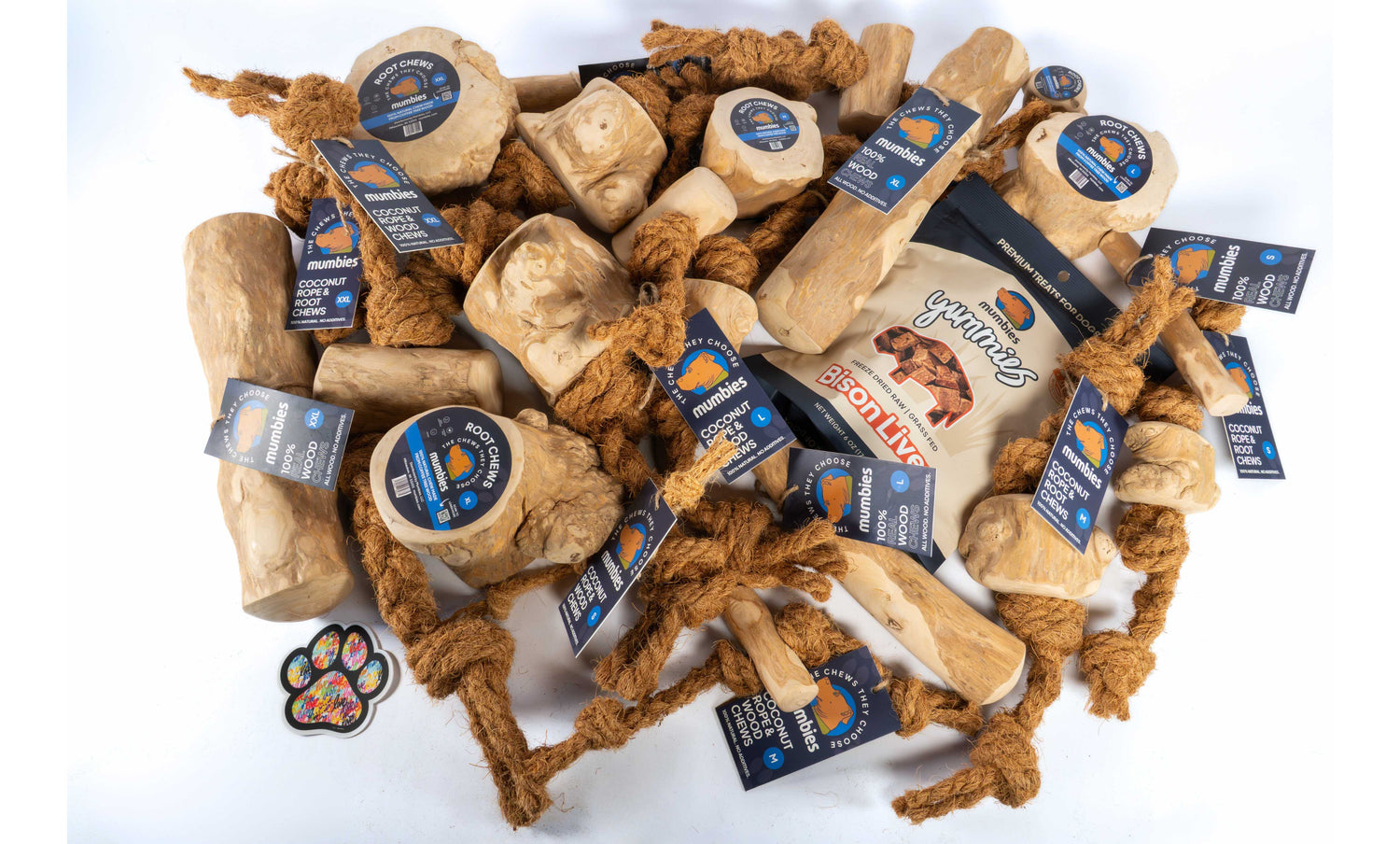


Do wood chews splinter? What every dog parent needs to know
The short answer: it depends on the wood — and that difference matters a lot.
If you've ever Googled "are wood chews safe for dogs" or seen a comment like "isn't that going to splinter?!" on a dog chew post, you're not alone. It's one of the most common questions we get at Mumbies, and honestly? It's a great one to ask.
Here's the thing — not all wood is the same. A stick from your backyard and a coffee wood chew from Mumbies might look similar at first glance, but they behave very differently once your dog gets to work. Let's break it down.
Why wood splintering is a real concern (and why you're right to ask)
When wood splinters, it creates sharp, jagged edges that can cut your dog's mouth, throat, or digestive tract. This is why vets often caution against letting dogs chew on random sticks — and it's a completely valid concern.
The problem isn't wood itself. It's the type of wood and how it breaks down under pressure.
Soft or dry woods — think pine, birch, or that fallen branch in your backyard — tend to crack and fracture along the grain when pressure is applied. That creates sharp shards. With backyard sticks in particular, you also have no idea what the wood has been exposed to: pesticides, mold, parasites, or rot.
So yes, wood can absolutely splinter. But here's where coffee wood is a completely different story.
Backyard sticks vs. coffee wood chews: a side-by-side look
|

What makes coffee wood different
Coffee wood — the kind used in Mumbies Original Chews and Root Chews — comes from the trunk and roots of the Coffea canephora tree. These trees are harvested at the end of their coffee-producing life, making our chews a sustainable byproduct of the coffee farming industry.
Here's what makes the wood itself special: coffee wood has an extremely dense, interlocking grain structure. Instead of cracking and splintering under pressure, it frays. Your dog's chewing action pulls apart soft, stringy fibers — kind of like how you'd peel apart a piece of cooked chicken. Those fibers are soft, not sharp, and dogs typically spit them out naturally.
That's a big deal.
No sharp edges. No shards. Just a satisfying chew that holds up over time.
The one thing that matters most: sizing
Even the safest chew becomes a concern if it's the wrong size. This is true of any chew — bully sticks, antlers, you name it.
With Mumbies, we always recommend sizing up if your dog is an aggressive or heavy chewer. A chew that's too small can become a choking hazard, or cause your dog to try to swallow it whole rather than chew it down.
Here's our general sizing guide:
XS — small breeds, puppies, light chewers (under ~10 lbs)
S — small to medium dogs, moderate chewers
M — medium dogs, moderate chewers
L — large breeds, heavy chewers
XL / XXL — extra-large breeds or the most determined chewers
When in doubt, go up a size. It's always the safer call.
What to do if you notice a lot of fibering
If your dog is going to town on their chew and you're noticing a buildup of soft fibers, that's totally normal — and expected. Just remove the fibers from their space the same way you would with any chew debris.
The rule of thumb for any chew: supervise your dog, especially the first few times. Get a feel for how they chew (some dogs are nibblers, some are aggressive chompers), and use that to guide your sizing and monitoring approach going forward.
Still have questions?
We love hearing from you — seriously, no question is too small. Reach out to us anytime and a real human from Team Mumbies will be in touch.
And if you're ready to let your pup try a chew that's designed to be safer from the start, shop our Original Chews and Root Chews here.

