
Chews-ing the right size for your pup
Picking the right size chew isn't just about fit — it's about safety, satisfaction, and getting the most out of every chew.
We get sizing questions all the time, and honestly, we love them. It means you're thinking carefully about what you're giving your dog — and that's exactly the kind of dog parent we love having in our community. 🐾
Here's everything you need to know to size your pup up right.
Start with two things: weight and chewing style
When it comes to Mumbies, size is determined by two factors — your dog's weight and how they chew.
Weight gives you a starting point. Chewing style tells you whether to stick with that size or go up.
If your dog is a casual chewer who nibbles and gnaws slowly, you can generally go with the size that matches their weight. If your dog is an aggressive chewer who goes after a chew like it owes them something... size up. Every time.
Why bigger is better (when in doubt)
This is the most important thing we can tell you: it is always better to have a chew that's too big than too small.
Here's the science behind it. Coffee wood gets its safety from its density — it's a very hard, tight-grained wood that resists cracking rather than splintering into sharp pieces. But smaller sizes naturally come from younger, thinner parts of the tree, which means they're less dense and more delicate.
A big dog with a small chew can crush it with the force of their jaws — like snapping a twig with your hands. But when the chew is large enough that they can't fully wrap their mouth around it, they tend to gnaw at the ends instead. Gnawing = good. Gnawing softens the wood gradually and creates those safe, soft fibers. Crushing = the chew breaks down faster than it should.
So if you're between sizes, go up. Your dog won't mind the extra chew to work through. 🐶
It's all about where the wood comes from
Here's something most people don't know — and it makes sizing make a lot more sense once you do.
Not all coffee wood is the same density, even within the same tree. The smaller chew sizes (XS, S) come from the younger, thinner branches near the top of the tree. That wood hasn't had as much time to mature and compact, so it's naturally a little more delicate. It's still great for the right dog — a small breed or a light chewer who nibbles slowly — but it won't hold up the same way for a heavy chewer.
As you move up in size, the chews come from older, thicker parts of the trunk. More years of growth means denser, tighter wood. That's why a Large or XL chew is so much harder to work through than an XS — it's not just bigger, it's genuinely more dense.
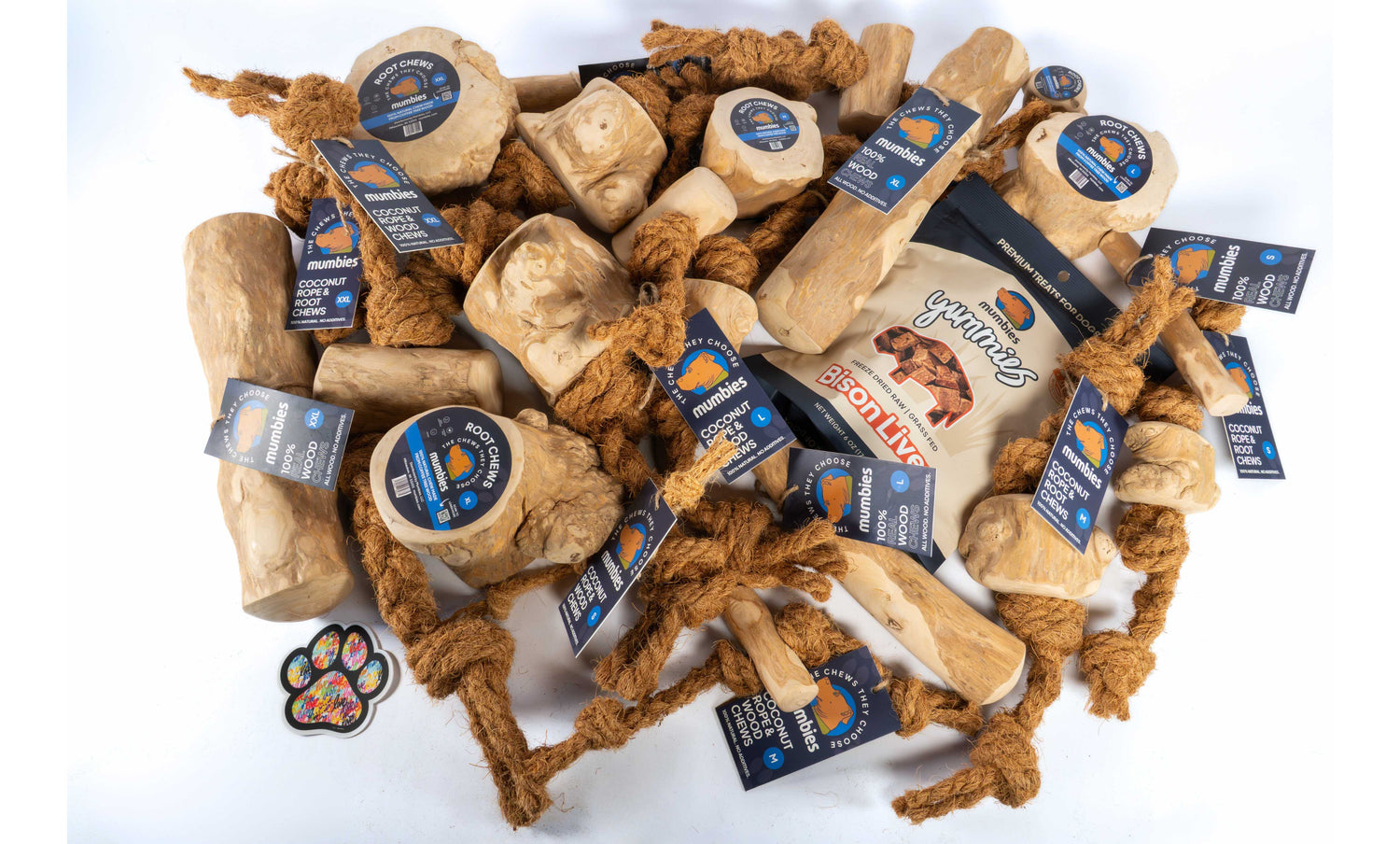
And then there's the Root Chew. The root is the oldest, most mature part of the coffee tree — and that makes it the densest wood we offer. If you have a serious power chewer who burns through regular chews faster than you'd like, Root Chew is worth trying. It's a different shape too (knobbly and irregular, which dogs love to work around), and it tends to last noticeably longer for heavy chewers.
So when you're thinking about what to order, it helps to think of it this way:
- Light chewer, small dog → Original Chew in their weight-based size
- Moderate chewer → Original Chew, consider sizing up
- Heavy or aggressive chewer → Size up on Original Chew, or try Root Chew
The Mumbies Size Guide

Here's the weight breakdown at a glance:
| Size | Weight Range | Best For |
| XS | Up to 10 lbs. | Small breeds, very light chewers |
| Small | 11-15 lbs. | Small dogs, light chewers |
| Medium | 16-30 lbs. | Medium dogs, light to moderate chewers |
| Large | 31-60 lbs. | Large dogs, moderate to heavy chewers |
| XL | 71-79 lbs. | Larger dogs, strong chewers |
| XXL | 80 lbs.+ | The big guys — and the chewers who mean business |
For the full detailed size chart with dimensions and weights by product type, visit our size chart page here.
A note on chew style
Two dogs can weigh the exact same amount and need totally different sizes based on how they chew. Here are some signals to watch for:
Size up if your dog...
-
Finishes chews really quickly
-
Tries to bite down through the middle rather than gnawing the ends
-
Has broken through other "tough" chews in the past (antlers, thick bully sticks, etc.)
-
Is a breed known for strong jaws — think Pitbulls, Rottweilers, Mastiffs, Labradors
Stick with your weight-based size if your dog...
-
Nibbles slowly and takes their time
-
Gnaws at the ends rather than trying to crush the whole chew
-
Has always been gentle with toys and chews
What to watch for once they start chewing
Every dog chews differently, so the first few sessions are a good time to observe and get a feel for your pup's style.
Normal things you'll see:
-
Soft, stringy fibers forming at the ends — this is the wood breaking down safely
-
Your dog spitting out small fibers — that's totally fine and expected
-
The chew getting slightly softer over time where they've been working it
If you notice the chew is being crushed or snapped rather than gnawed, that's your cue to size up on the next order.
As with any chew, we always recommend supervising your dog — especially the first few times — until you know their style.
Still not sure? We're here to help.
Sizing questions are our favorite kind of question. Reach out to supprt@mumbies.com anytime and someone from Team Mumbies will help you figure out exactly what your pup needs.
Ready to find the right fit? Shop all Mumbies chews here.

