

My dog won't stop chewing everything — here's what actually helped
Share
If your shoes have teeth marks and your couch has seen better days, you're not alone. And no — your dog isn't out to get you.
Destructive chewing is one of the most common things dog parents deal with, and it's also one of the most misunderstood. The good news? Once you understand why your dog is doing it, the fix becomes a lot more obvious.
Here's what's actually going on — and what genuinely helped us.
First: your dog isn't being bad
This is important to say out loud. Chewing is not misbehavior. It's instinct. Dogs are hardwired to chew — it's how they explore their environment, process stress, and keep their minds occupied. When a dog chews your favorite throw pillow, they're not being spiteful. They're being a dog.
The problem isn't the chewing. It's that they don't have anything better to chew on.
Why dogs chew (more than you might think)
Most people chalk up chewing to boredom, and that's part of it — but there's actually a lot more happening when your dog settles in for a good gnaw session.
It's mentally stimulating. Chewing requires focus. A dog working through a chew is engaging their brain — processing texture, pressure, resistance. It's the canine version of a puzzle. Studies on animal behavior consistently show that chewing and other oral activities reduce cortisol (the stress hormone) in dogs, which is why a good chew session often leaves them calm and settled afterward.
It relieves anxiety. The repetitive motion of chewing has a self-soothing effect for dogs. This is especially true for dogs with separation anxiety or dogs who are in a new environment. Chewing is one of the most accessible ways a dog has to regulate their own emotional state.
It burns energy — without burning legs. Mental fatigue is real. A dog who has had a solid chew session is often just as tired as one who went for a long run — because their brain has been working the whole time. For high-energy dogs or days when a long walk isn't possible, a good chew is one of the best tools you have.
It's just... satisfying. There's an intrinsic reward in chewing that dogs seek out. It feels good. Their jaws are meant to do it.
When you understand all of that, it makes sense why a dog left with nothing to chew will find something to chew. You'd do the same thing.
The turning point: giving them something worthy of their attention
The shift happened when we stopped trying to get our dog to stop chewing and started making sure they always had something worth chewing.
Redirecting an instinct works a lot better than suppressing it.
But not every chew is created equal. We went through plenty of them — things that lasted ten minutes, things that fell apart into pieces we weren't comfortable with, things that were so hard we worried about their teeth. It took a while to find what actually worked.
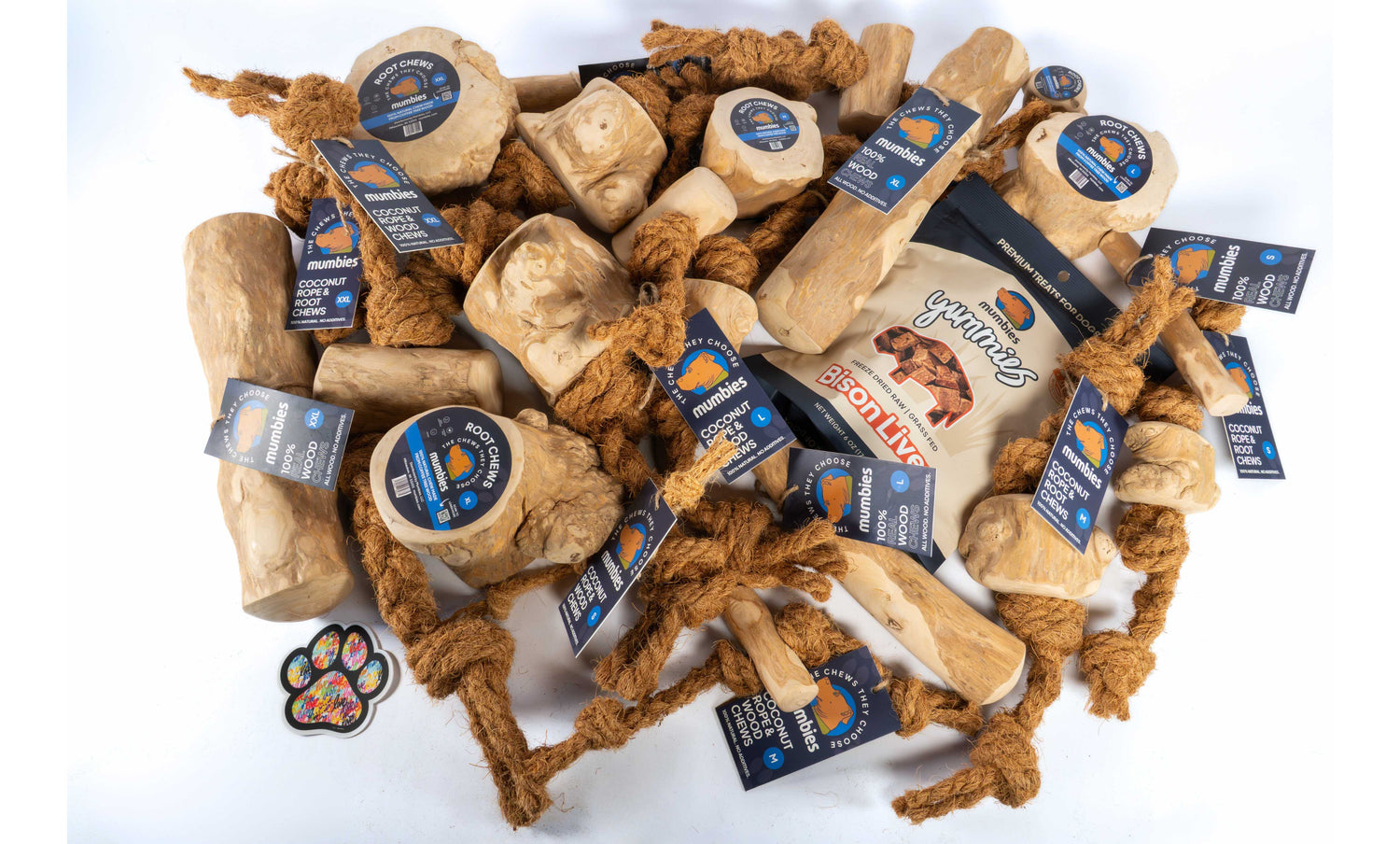
What we landed on: coffee wood chews
We founded our Mumbies Original Chews a while back, and they became a staple pretty quickly.
Coffee wood chews are made from the wood of the Coffea canephora tree — the same plant your morning cup comes from. The wood is incredibly dense, which is what makes it so good for chewing: instead of cracking or splintering into sharp pieces, it frays. The chewing action pulls apart soft, stringy fibers that dogs spit out naturally. No sharp edges. No chunks.
And because the wood is so dense, they last. We're not talking ten-minute chews. We're talking days, sometimes weeks, depending on your dog.
A few things we noticed pretty quickly:
- Calmer after chewing. After a good session with the chew, our dog was visibly more settled. The mental effort of working through something dense and satisfying has a real effect.
- Less interest in furniture. When there's always a chew available, there's less reason to go looking for something else to gnaw on.
- No weird ingredients. It's just wood. That's it. No additives, no preservatives, no mystery fillers.
A note on sizing (it matters more than you think)
One thing we learned early: size is everything with coffee wood chews.
The smaller chew sizes come from younger, thinner parts of the coffee tree — which makes them less dense and more delicate. A heavy chewer with a chew that's too small can crush right through it, which defeats the purpose. Bigger chews come from more mature, denser wood. And Root Chews — which come from the root of the coffee tree, the oldest and densest part — are especially great for dogs who really go after their chews.
The rule of thumb: when in doubt, size up. You want the chew to be large enough that your dog gnaws at the ends rather than trying to bite all the way through. Our sizing guide can help if you're not sure where to start.
Other things that helped alongside the chew
The chew was the biggest piece for us, but a few other things made a difference:
More mental enrichment overall. Sniff walks, puzzle feeders, training sessions — anything that gives their brain a job to do. A mentally tired dog is a settled dog.
A consistent routine. Dogs do better when they know what to expect. Consistent feeding, walk, and rest times reduce ambient anxiety, which reduces the urge to self-soothe through destructive chewing.
Supervision during the transition. If your dog has been in the habit of chewing things they shouldn't, it takes a little time to redirect. Keep an eye on them while you're building the new habit, and redirect calmly to their chew when you catch them going for something else.
Not making a big deal of it. Reacting strongly when your dog chews something they shouldn't (even if the reaction is negative) can actually reinforce the behavior. A calm redirect is more effective every time.
The short version
Your dog isn't chewing to be difficult. They're chewing because it's what dogs do — and because their brain and body genuinely need it. The fix isn't to stop the chewing. It's to give it somewhere good to go.
A chew they're actually interested in, sized right for how they chew, is one of the simplest and most effective tools you have. And the bonus? A dog who's had a great chew session is usually a very, very good dog. 🐶
Shop Mumbies chews here — and if you're not sure where to start, our sizing guide is a good first stop.

