

How to build a daily enrichment routine for your dog
How to build a daily enrichment routine for your dog
You don't need a certification in dog behavior or a two-hour window every afternoon. A good enrichment routine is simpler than you think — and your dog will feel the difference faster than you expect.
Enrichment has had a big moment lately, and for good reason. More dog parents are realizing that a walk around the block — while great — isn't always enough. Dogs need to sniff, chew, solve, play, and explore. When they get to do those things consistently, something shifts. They're calmer. They listen better. They stop auditioning your furniture as a chew toy.
Start here
What your dog is already telling you
Before you build anything, pay attention to what your dog does when they're understimulated. That behavior is information. You don't have to fix everything at once — start by identifying one or two patterns and build from there.
The framework
The four pillars of a good enrichment routine
A solid routine doesn't have to hit all four every day — but over the course of a week, a dog who gets a mix of these will be noticeably more settled and content.
A dog's nose is their superpower. Sniffing is one of the most mentally exhausting things a dog can do — in the best possible way. A 20-minute sniff walk where your dog actually gets to stop and investigate can tire them out more than a 45-minute brisk walk.
- Let them lead on at least part of every walk — nose down, no agenda
- Hide a few pieces of Yummies Bison Liver Treats around the house or yard
- Try scatter feeding: spread a portion of their meal across the grass and let them work for it
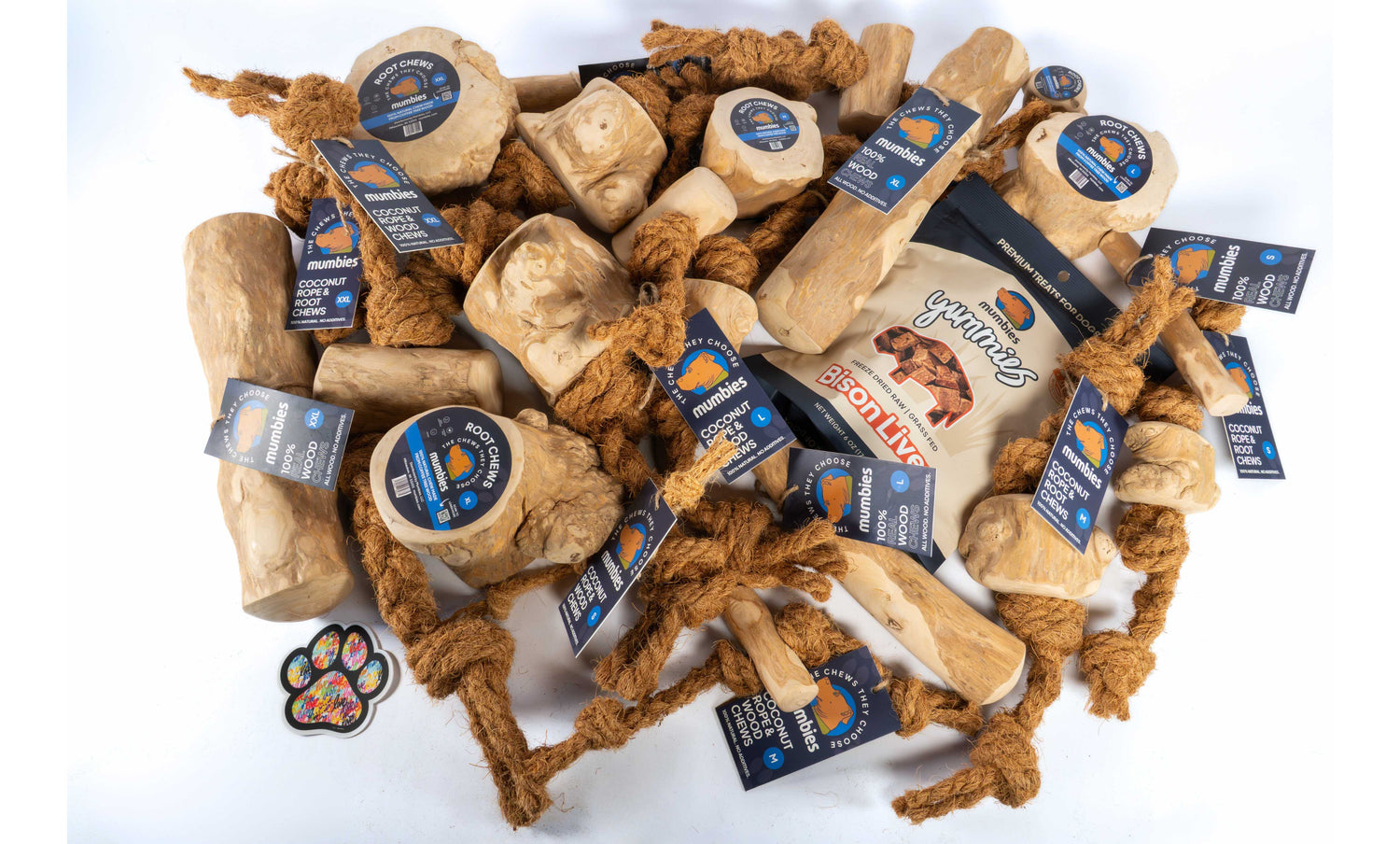
Chewing lowers stress hormones and produces the kind of focused calm that makes a dog genuinely pleasant to be around afterward. It's one of the most accessible enrichment tools there is — it requires nothing from you once it's set up.
- Build a regular chew time in — after a walk, before dinner, during a meeting
- Keep a chew available so your dog always has something to reach for
- Match size to chewing style — our sizing guide can help
This is anything that makes your dog think to get a reward. Five to 10 minutes of problem-solving enrichment can have a surprisingly big effect on a dog's overall energy level and focus — it's the mental equivalent of a workout.
- Swap their food bowl for a puzzle feeder a few times a week
- Use a snuffle mat at mealtime — hide kibble in the fabric folds for them to root through
- Freeze a lick mat with peanut butter and crumbled Yummies Bison Liver Treats
Interactive play engages the prey drive, gets dogs thinking and reacting, and deepens the bond between you. It doesn't have to be long — even five minutes of focused tug or chase counts.
- Build in a five- to 10-minute play session before or after a walk
- Keep a tug toy accessible for when the "I need attention" eyes arrive
- Training counts too — five minutes on a new skill is both bonding and enrichment
Put it into practice
What a simple daily routine could look like
You don't need a rigid schedule. But having a loose rhythm helps — both for your dog (who thrives on predictability) and for you (because it's easier to stick to something when it's already built in).
Sniff walk. Let them lead for at least part of it. Take the long way if you can. No rush — that's the whole point.
Problem-solving. A puzzle feeder or a frozen lick mat gives them something to work through while you're gone — or while you're on a call.
Chew time. A Mumbies chew while you decompress from the day. They settle, you settle. Everyone wins.
Play session. Tug, fetch, or training — followed by whatever their usual evening looks like. Dogs who get a focused play session before bed often settle more easily at night.

Every dog is different
Adjusting the routine for your pup
The routine that works for a two-year-old Lab mix isn't the same one that works for a 10-year-old beagle or a newly adopted rescue who's still finding their footing.
Need more of everything — more sniff time, longer chews, more complex puzzles. If they're still bouncing off the walls after a full enrichment day, add more before assuming something is wrong.
Do best when enrichment is calm and predictable. Chewing and sniff work are especially good — both are low-pressure and self-directed. Let them engage at their own pace.
Their brains didn't retire just because their joints slowed down. Gentler puzzle feeders, sniff walks at a slower pace, and appropriately-sized chews keep older dogs mentally sharp and emotionally engaged.
Often coming from environments with very little enrichment. Start simple, stay consistent, and give them time to learn that good things happen here. That consistency itself is enriching.
The short version
A great enrichment routine doesn't require hours or expensive gear. It requires knowing what your dog needs, building a few simple habits around it, and giving them the right tools to do the thing dogs are wired to do: sniff, chew, solve, and play.

